Into the Abyss: QuikrStuff Takes on Canyonlands’ Legendary White Rim Trail
There was a moment at the very edge of the Island in the Sky mesa where we looked down at the Shafer Trail switchbacks and wondered what, exactly, we had signed up for. The dirt road plunged 1,200 feet down a near-vertical sandstone cliff face, spiraling into the sprawling, rust-red abyss of Canyonlands National Park.
As we quickly realized, this dizzying descent was just the beginning of our White Rim Trail adventure. Widely considered a bucket-list ride for mountain bikers, the White Rim Road is a 100-mile loop that carves its way through some of the most isolated and spectacular terrain in the American Southwest, and the QuikrStuff crew couldn’t wait to tackle it.
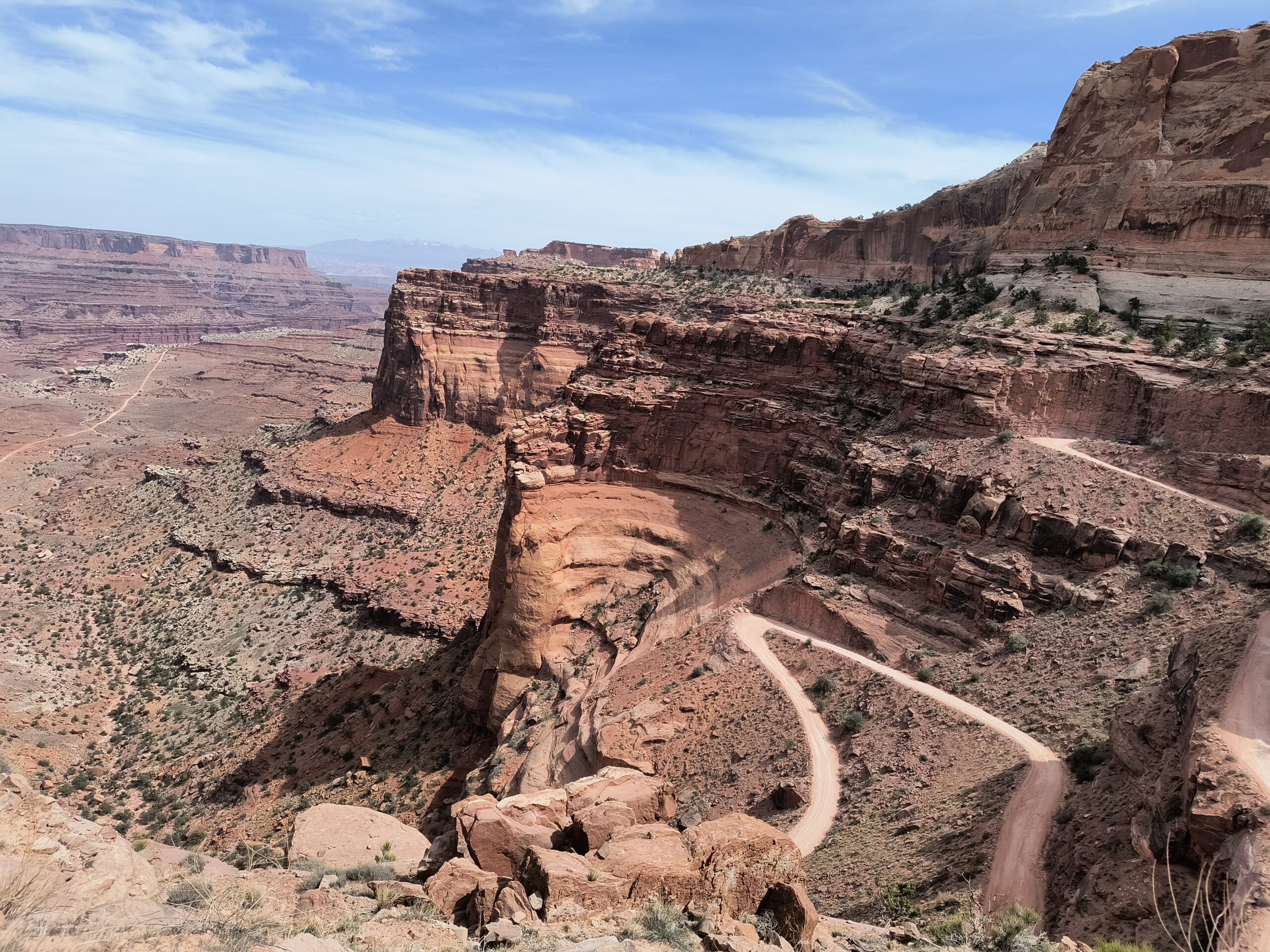
Riding Through a Geologic Wonderland The White Rim is aptly named. After descending from the mesa top, we spent the majority of the route navigating a striking layer of white sandstone that forms a bench high above the Colorado and Green rivers. The landscape felt immense, silent, and entirely indifferent to our presence.
Riding the route was like pedaling through a geology textbook. We wove past iconic formations like the Washer Woman Tower, Musselman Arch, and Candlestick Tower. We peered over vertigo-inducing ledges at Black Crack and traced the Green River as it cut through Labyrinth Canyon. At night, our designated campsites gave us a front-row seat to some of the darkest, most star-studded skies in the Lower 48; most nights, we caught shooting stars streaking overhead. We even spotted a group of bighorn sheep scaling the sheer cliffs around us. As always, we were careful to stay on the trail to protect the fragile, living cryptobiotic soil that holds this desert ecosystem together.
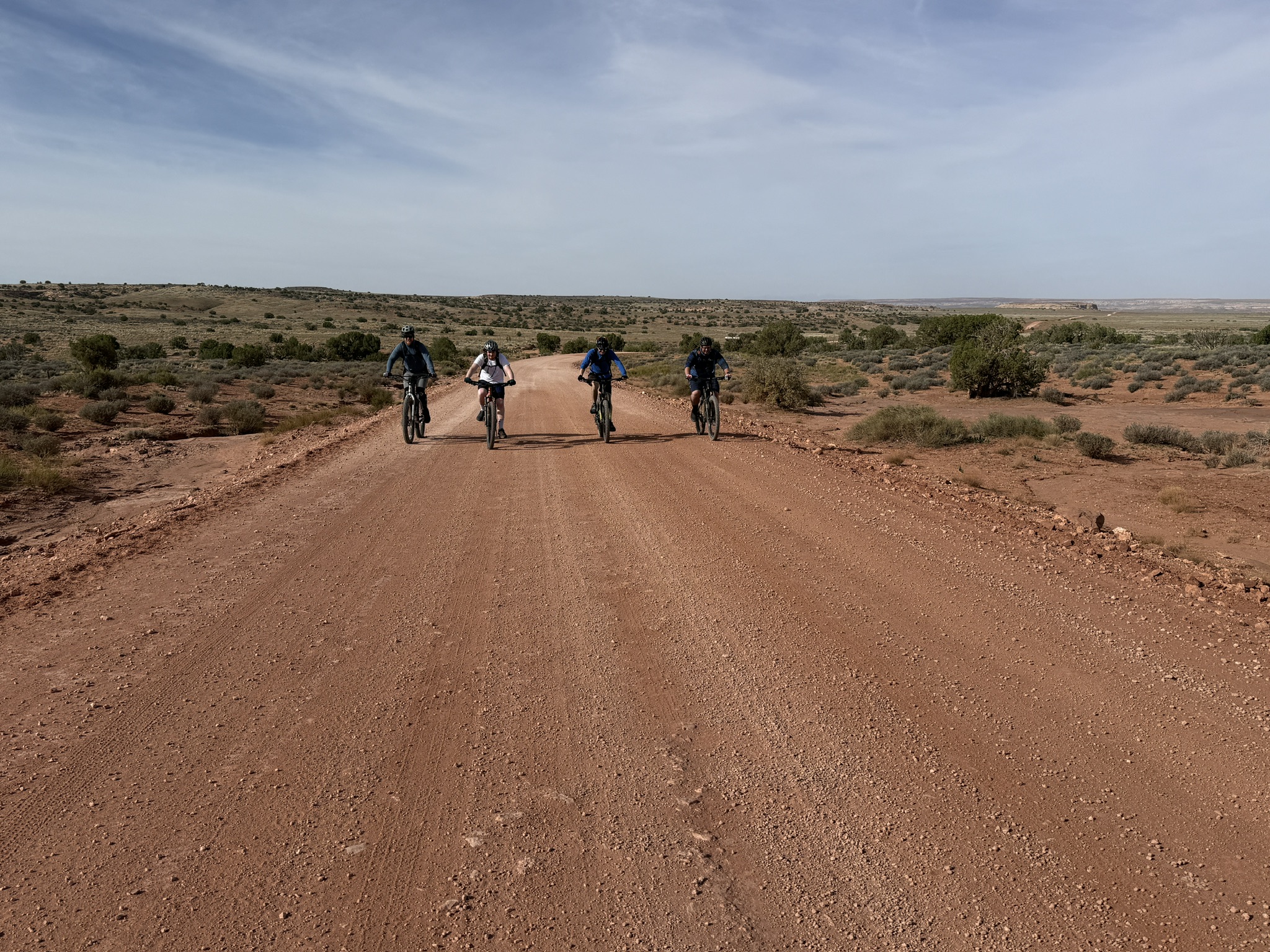
The Beautiful, Painful Grind The White Rim is definitely not your local weekend fire road. While the technical riding difficulty is generally moderate (it is a 4WD doubletrack rather than technical singletrack, after all) the physical toll on our team was inevitable.
We logged roughly 100 miles and about 7,000 feet of elevation gain. But as anyone who has completed the route will tell you, the elevation profile doesn’t tell the whole story. The terrain shifted from packed sediment to slickrock and, worst of all, some notoriously soul-crushing stretches of deep sand. We navigated brutal, punch-in-the-gut climbs. Getting up and over the Murphy Hogback required grinding up a steep, narrow shelf road, and the loose, rocky ascent of Hardscrabble Hill forced most of us to hike-a-bike. Finally, our reward at the end of the loop was the Mineral Bottom switchbacks: a relentless 800-foot climb back to the mesa top.
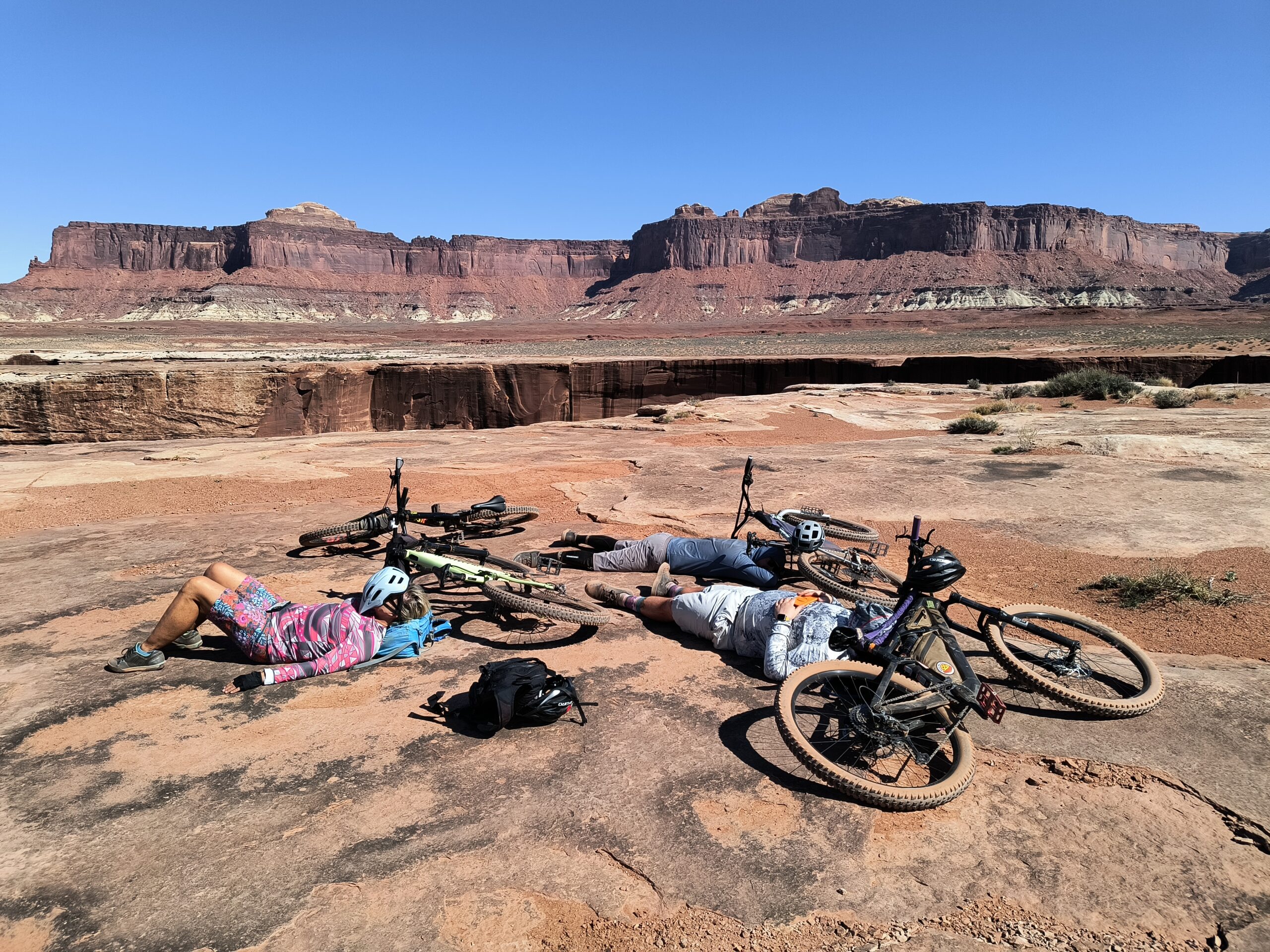
We based our outing on a 4-day, 3-night riding window, which we found is the sweet spot for a challenging but enjoyable pace. If you really want to take your time to soak in the slot canyons, ruins, and sweeping vistas, you might want to stretch it to five days.
We were also lucky enough to witness a small piece of White Rim history out on the trail! On our third day, we were blown away by the pace of an oncoming rider going the opposite direction. Tray pointed out his Scott Scale mountain bike fitted with drop bars. We didn’t think much of it at the time, just assuming, “That guy must be doing it in a day.” Well, it turns out that was New Zealander Cam Jones on his way to setting a new FKT (Fastest Known Time). He rode the whole thing in 5 hours, 23 minutes, and 27 seconds!
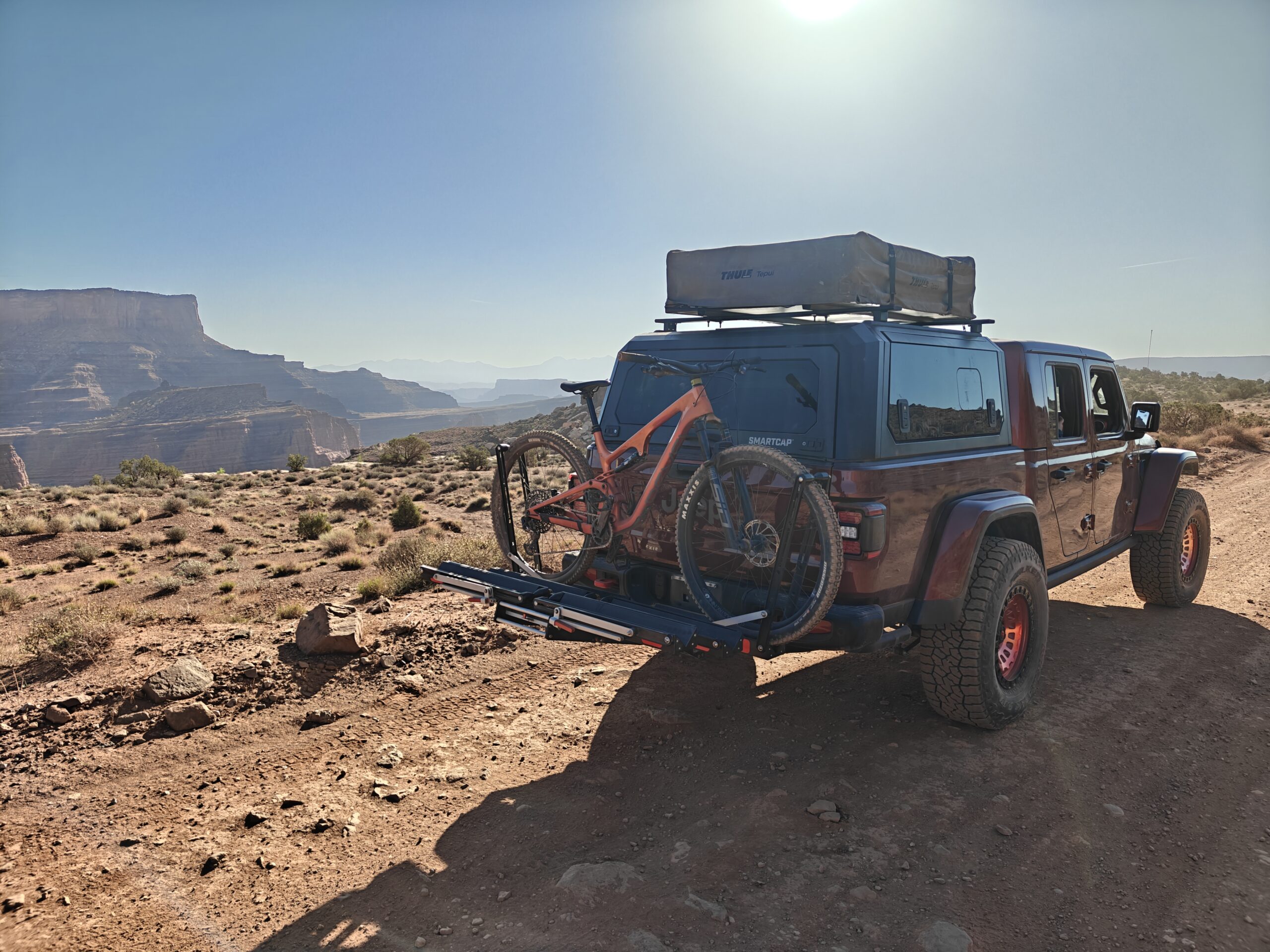
Nailing the Logistics The White Rim is as much a logistical puzzle as it is a physical challenge. Here’s what worked for us out there:
-
The Water Problem: There is absolutely no potable water on the White Rim Trail. None. The rivers are heavily silted and notoriously difficult to filter. Since riders need at least a gallon of water per day, almost everyone enlists a high-clearance, 4WD support vehicle. We packed almost 60 gallons of water for our crew of 7 (for 4 days and 3 nights), and that was just enough.
-
The Bike: A hardtail mountain bike or a short-travel full-suspension bike is ideal. We highly recommend “plus-sized” tires (2.8″ to 3.0″) to help you float through the route’s notorious sand traps.
-
Permits: You can’t just show up and ride. The National Park Service requires backcountry permits for all overnight stays, and campsites must be reserved in advance. During the prime spring and fall riding seasons, these sell out within minutes. You need to have your exact route (campsites and dates) laid out so you can log in and grab your spot immediately. Any hesitation or modification on sign-up day will likely lose you your place in line.
-
Self-Sufficiency: Cell service is practically nonexistent, there are no bailout points, and a tow for a broken support vehicle can cost upwards of $1,000. Bring a comprehensive toolkit, extra tubes, a first aid kit, and an emergency satellite messenger.
-
Support: While some folks ride this route fully unsupported (carrying everything on their bikes), we opted for a supported trip. We had two sag vehicles in our convoy—one driving ahead of the group, and the other pulling up the rear. This allowed us to carry all our camping gear, food, and water with relative ease.
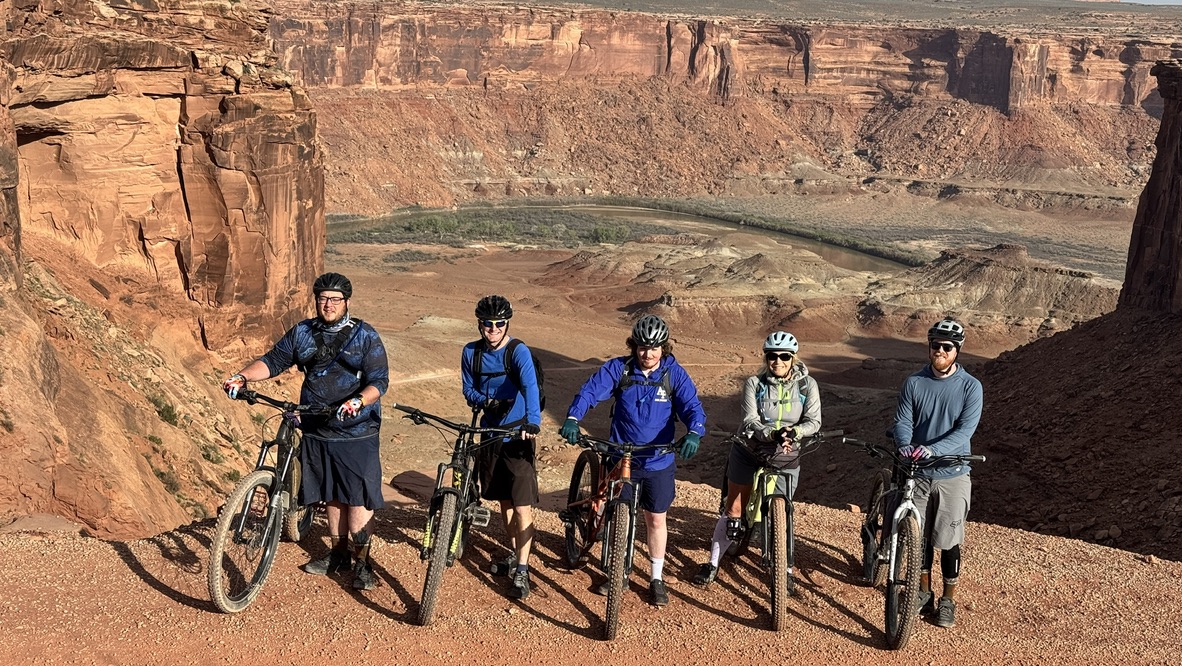
This trip baked us in the sun, filled our drivetrains with red dust, and pushed our legs to the brink, but more than anything, it tested and strengthened us as a team. You quickly learn a lot about your coworkers when you are 50 miles into the backcountry, staring down a soul-crushing hike-a-bike up Hardscrabble Hill with tired legs and waning daylight.
Out on the White Rim, daily office routines melted away, replaced by a pure, shared reliance on one another. When the deep sand threatened to derail our momentum, we found ourselves cheering each other on, trading off the lead to break the wind, and sharing extra snacks to keep morale high. The teamwork extended long after we were out of the saddle, too. Every evening, the logistics of our massive, 60-gallon water supply, meal prep, and camp setup became a synchronized dance.
The highlights of the trail weren’t just the geological wonders; they were the moments we shared in between. Swapping stories and inside jokes around the cook station in the evening. Passing tools and troubleshooting mechanicals in the dirt without a second thought. That incredible plunge into the river to wash away a hard day’s grind. Zane’s cooking skills, that have proven many times over to be a source of joy at QuikrStuff.
When we finally crested that relentless 800-foot switchback climb out of Mineral Canyon and looked back at the sprawling expanse we had just conquered, the sense of collective pride was palpable. We didn’t just survive the White Rim Trail; we tackled it together. It culminated in an unbelievably fulfilling trip that proved shared suffering is the absolute best catalyst for camaraderie. It’s a bucket-list ride for a reason, and the QuikrStuff team is already plotting our next grand adventure, together.